This is a space dedicated to sharing updates from the Green Economy, Healthcare, and Tech Networks; reporting on goals and insights, relaying program openings and recruitment opportunities, and fostering cross-network collaboration.
The GEN Website is LIVE
Preview of the Green Economy Network website
Introducing… the Green Economy Network website! The GEN’s website is live and ready for employers, practitioners, policy makers, and jobseekers. Here you will find:
Interactive map of partner sites
Catalog of partner trainings and certifications
Exclusive member portal for working group members
Jobseeker surveys to navigate network partner trainings
Navigating the green economy can be a challenge for both seasoned pros and newbies alike. The Green Careers Council working group identified a need to better understand candidates’ interests, backgrounds, and dealbreakers in order to properly serve jobseekers in the green economy. The group developed our GEN Jobseeker Assessment Tool is housed on the GEN website. Check it out here!
Healthcare Sector Network
Kicking off our referral task force
After a successful first run at 26 referrals in 60 days, the HSN started up their referral task force with HSN recruitment, admissions, and intake professionals at the helm. Building on their success of last year, Grace Institute is leading the coordination of the task force through facilitation, management of the referral form, and leading the improvement of our processes. Our goal: unify the admissions processes so that motivated jobseekers do not slip through the cracks.
Tech Sector Network
Exploring the intersection of climate and tech
TSN partner The Knowledge House hosted Energy and Empanadas, bringing together tech-enabled workers from New York Power Authority (NYPA) and Con Edison to speak to current and alumni jobseekers from TSN programs and nearby high schools. The convening sparked further ideas on how to better introduce climate tech companies as viable tech career pathways.
For more about Sector Networks, contact Malia Darby, Manager of Work Solutions at JobsFirstNYC via email at mdarby@jobsfirstnyc.org.
New York City needs a modern, aligned education–training–employment system that works in real time with labor-market and neighborhood conditions to prepare young people for success in a rapidly changing economy. More than 106,000 young adults remain out of school and out of work, and an even greater number are underemployed in unstable, low-wage jobs. These challenges are concentrated in specific neighborhoods that lack coherent, connected systems of education, skills training, and employment.
JobsFirstNYC was created in 2006 to address this challenge. We create and advance solutions that break down barriers and transform the systems supporting young adults and their communities in the pursuit of economic opportunity. Our work involves more than 200 partners across all five boroughs and has connected more than 20,500 people to education, training, and employment. Our place-based solutions—developed in neighborhoods with the highest out-of-school, out-of-work and unemployment rates—have demonstrated that coordinated local systems measurably improve access to education, training, and employment. We have leveraged more than $35 million in public and private investment and supported models that have been adopted and replicated across schools, workforce programs, and city agencies.
Through our Community, Education, Work, and Policy Solutions, JobsFirstNYC has validated a set of practices that improve young people’s transitions into postsecondary education, align training with employer needs, strengthen coordination at the neighborhood level, and support young adults in accessing upwardly mobile work. The recommendations below outline the next steps the City can take to build a more unified and responsive system.
Recommendation 1: Strengthen and modernize pathways from school to work.
Young adults need clear and structured pathways that connect high school, community-based programs, colleges, and skills training. Today, these pathways remain fragmented. JobsFirstNYC’s work shows that when these pathways are aligned and coordinated across institutions, young adults move more successfully into postsecondary opportunities and employment.
By modernizing pathways between school, training, and work—and by integrating workforce development, hands-on learning, and employer connections into the school and skills training experience—New York can ensure that all young adults are equipped with the skills, experience, and networks needed to succeed.
Recommended actions:
Universalize career exploration and work-based learning – Today, far too few students in the City’s public schools and CUNY have access to career-connected learning. While we applaud the emergent work that NYC Public Schools (NYCPS), CUNY, and the Department of Youth and Community Development have done in this space, greater investment is needed to universalize work-based learning and expand paid internships, apprenticeship opportunities, and structured workplace experiences that connect directly to postsecondary education, skills training, and career progression.
Strengthen CBO–college partnerships through structured dual-enrollment pathways – Create consistent, City-supported models where community-based organizations (CBOs) partner with colleges and advanced training providers to offer early exposure to credit-bearing coursework, clearer advancement routes, and smoother transitions into higher-skill training. Dual-enrollment structures can serve as a backbone for longer on-ramps that integrate foundational skills, sector preparation, and college-linked progression.
Scale advanced career development across the education system – Every year, tens of thousands of students in traditional high schools and high school equivalency programs are locked out of opportunities for career development because their school has no such offerings. Career and technical education schools and programs are a strong foundation; FutureReadyNYC is on the right path. CUNY Beyond is promising. But much more is needed.
Move from employer insight to workplace opportunities as a core driver of school-to-career strategy – JobsFirstNYC was honored to partner with NYCPS to engage deeply with their Industry Commissions. This engagement led to a report that identified a variety of ways the Industry Commissions could more effectively leverage employers. The key takeaway: convert employer insights into workplace experiences. Doing so helps schools identify—and students learn—the key skills, knowledge, and competencies required to pursue a career in a rapidly evolving economy.
Recommendation 2: Invest in neighborhoods so young adults can thrive where they live.
All young adults deserve to live in communities with strong education and training options, accessible work opportunities, and a vibrant civic life—yet far too many New Yorkers do not. In fact, as JobsFirstNYC has recently shown, more than 106,000 young adults are neither in school nor working; this population is heavily concentrated in neighborhoods that have faced years of disinvestment. Acoordinated, place-based mobility strategy is essential to reversing these inequities.
Leading research from economists such as Raj Chetty and summary research published by the US Partnership on Mobility from Poverty show that neighborhood-level investments improve long-term outcomes when they strengthen schools, workforce pipelines, transportation access, and access to family-sustaining jobs.
Develop a unified place-based strategy for New York City – The City should build on proven neighborhood-based models by adopting a unified place-based economic mobility strategy. JobsFirstNYC’s Brownsville Hub Cooperative helped inform the City’s Blueprint for Community Safety, and our place-based and sector partnerships influenced the New York City Economic Development Corporation’s Economic Mobility Networks. A coordinated citywide framework would create consistent standards and shared strategies while allowing for flexibility and supporting community-driven economic development, education, employment, training, and economic mobility goals.
Prioritize under-resourced neighborhoods – Use data on unemployment and on out-of-school, out-of-work youth to determine where systemic intervention is most needed. For example, recent data from the American Community Survey show that there are six neighborhoods with alarmingly high rates of 16- to 24-year-olds who are neither working nor in school. These neighborhoods deserve the City’s full attention.
Support community-led hubs that organize partners and resources – Strengthen hubs that coordinate education, training, employment, youth development, and economic initiatives by building the capacity of local partners that sustain these efforts.
Integrate employer demand and youth voice into neighborhood strategies – Ground neighborhood strategies in real employer demand and strong employer partnerships. Employers should help shape training, validate skills, and support clear pathways into in-demand roles. Youth voice should guide priorities so that training reflects young people’s interests and strengthens trust in neighborhood systems.
Recommendation 3: Build next-generation work solutions for a changing New York City economy.
Sectoral employment approaches align training with the needs of high-growth industries, creating clear pathways into stable jobs and improving outcomes for young adults. But the next phase requires deeper coordination among CBOs, colleges, employers, and training providers, along with training systems that can keep pace with a fast-changing labor market.
JobsFirstNYC’s Young Adult Sectoral Employment Project—the nation’s first youth-centered sectoral employment initiative—offers a tested blueprint: employer-led, industry-aligned training grounded in positive youth development. When expanded into strong sector networks and paired withstackable, “earn-and-learn” pathways, these approaches boost employment and earnings and help ensure that young adults who are out of school and out of work are first in line for growth in industries like tech, healthcare, and the green economy. Together, these networks do more than connect training to jobs, they create a citywide ecosystem that increases access to economic mobility.
Recommended actions:
Build training models that strengthen durable skills and use modern systems to track shifting labor-market needs – Develop training that builds durable, transferable skills valued across occupations and sectors. In parallel, modernize workforce systems so they can continuously update changing functional and technical skill requirements using real-time labor-market intelligence, predictive analytics on job taxonomy shifts, and employer-informed feedback loops.
Support universal childcare and pre-K as essential workforce infrastructure – Expand access to affordable childcare and pre-K so parents and caregivers can participate fully in education, training, and employment. Treat childcare as core infrastructure for any effective workforce pathway.
Strengthen coordination among CBOs, K–12 schools, colleges, and employers through a dual-track approach – Use a dual-track strategy that supports both immediate employment pathways and longer on-ramps into advanced training and higher education, including earn-and-learn models. As an early priority, the City should establish a standard coordination framework and pilot it in select neighborhoods so programs can connect short-term training to longer-term advancement routes.
Build an employer–workforce strategy that positions talent as core to economic development – The City should replace ad hoc employer partnerships with a coordinated strategy that links talent development to economic development, using tools such as shared employer role standards, local-hire approaches, and targeted incentives that encourage employers to create clear entry-level pathways and advancement opportunities.
Prioritize neighborhoods with the highest unemployment rates – Ensure that training and hiring strategies are industry-driven and reach neighborhoods with the highest barriers. Local impact sourcing is a strong example of this approach, bringing digital skills centers and tech-focused jobs directly to under-resourced neighborhoods while building local recruitment pipelines and supporting long-term community economic resilience. See Appendix 1: Local Impact Sourcing, New York City for a detailed proposed strategy.
Recommendation 4: Prepare young adults to navigate and shape an AI-driven economy.
Artificial intelligence (AI) and automation continue to reshape New York City’s labor market. Traditional entry-level roles are shrinking—postings have fallen by up to 50% in some sectors since 2023—while employers are rapidly increasing expectations for digital fluency, communication, adaptability, and problem-solving. To keep pace with this shift, New York City must ensure that its education, workforce, and community systems are preparing young adults for the roles that are emerging rather than those that are disappearing.
JobsFirstNYC is already supporting the workforce ecosystem in meeting this challenge through AI-centered initiatives and convenings. Building on research with partners, we collaborated with the Workforce Professionals Training Institute and the NYC Employment and Training Coalition to develop fieldwide AI guidelines. And through early explorations of how AI can accelerate impact, such as our Skills Mapping initiative, JobsFirstNYC continues to lead in understanding both the future of work and how New Yorkers can best be served. By integrating these insights into programs, curricula, and training strategies, the incoming administration can equip young New Yorkers for emerging roles, build a more resilient workforce, and ensure that young adults are positioned not merely to react to technological change but to shape and thrive in the City’s evolving economy.
Recommended actions:
Conduct a citywide analysis of how AI is reshaping early-career roles – Commission new research—and leverage existing research—to identify which entry-level jobs are declining, which are being reshaped, and which are emerging across high-growth sectors. Use this analysis to guide City planning, occupational standards, and program investments.
Modernize digital and AI skill development across education and workforce systems – Integrate digital literacy, foundational technology skills, and responsible AI use across NYCPS, CUNY, community-based programs, and publicly funded workforce training. Ensure alignment with employer-validated competencies and create clear pathways from learning environments into in-demand roles. Invest in templates, toolkits, and technical assistance that help mission-driven organizations integrate technology in ways that strengthen —not replace—human-centered practice and ensure equitable access.
Establish citywide standards for the responsible use of AI in education, training, and hiring – Develop guidance and implementation standards that ensure transparency, data privacy, equity protections, and safeguards against algorithmic bias. Require all City-funded programs and vendors to adhere to these standards.
Increase access to work-based learning that reflects the future of work – Partner with employers to create internships, apprenticeships, and project-based learning experiences where young adults can apply digital, technical, and problem-solving skills in real-world settings shaped by new technologies.
Engage young adults as co-designers in all AI-related public initiatives – Research consistently shows the value of human-centered design. Young adults’ perspectives must inform AI strategies, as they are the ones who will live and work in this new economy. Compensate young adults for participating in design sessions, testing new tools, and advising the City on responsible AI integration. Adopt a human-centered design approach that reflects the needs and experiences of young New Yorkers, particularly those from communities most affected by technological disruption.
Recommendation 5: Use youth-centered data and accountability to drive results.
New York City cannot improve outcomes for young adults if it does not consistently track how they enter, move through, and advance in the labor market. Although the City collects extensive data, this information is rarely organized around young adults’ experiences, disaggregated to expose inequities, or used to inform planning and investments. A youth-centered data and accountability strategy is necessary to identify persistent barriers and ensure that public dollars lead to better outcomes.
Recent JobsFirstNYC’s analyses show that headline improvements often mask serious challenges for young adults. Unemployment, underemployment, and labor force withdrawal remain concentrated in specific neighborhoods, and many young New Yorkers are clustered in low-wage, unstable work. At the same time, City planning strategies and major economic development efforts rarely treat young adults as a distinct group with specific needs, such as longer on-ramps for career exploration, improved literacy and numeracy, and stronger wraparound supports. If the City expects better results, it must collect the right youth-specific data, share these data transparently, and use them to drive policy, funding, and program decisions.
Recommended actions:
Mandate annual reporting on youth labor-market intelligence – Partner with youth-centered intermediaries and research organizations to develop annual, publicly available reporting on key youth labor-market indicators, including employment, unemployment, underemployment, wages, sector of employment, and participation in education and training. Data should be disaggregated by age, race, gender, borough, and neighborhood so that policymakers, providers, and communities can see where progress is occurring and where gaps persist.
Embed youth employment outcomes in City economic and workforce plans – Make youth outcomes a core component of citywide economic development, workforce, and education planning. Require agencies to set goals and track progress using a shared set of youth indicators, such as sustained employment, wage growth, successful transitions from education and training into work, participation in career exploration, and access to wraparound supports. Use these indicators to guide funding decisions and to assess whether major initiatives are improving conditions for young adults specifically—not just for the City’s population as a whole.
Fund long-term research and tracking on youth economic mobility – Invest in ongoing research that follows young adults over time to understand how public investments in education, training, housing, and workforce programs affect long-term economic mobility. Support partnerships between the City, researchers, and intermediaries to analyze trends, to identify which models produce real gains for young adults, and to make those findings available to agencies and providers. Use this evidence to refine strategies, retire approaches that are not working, and scale the practices that have the strongest impact.
Build a longitudinal data system spanning pre-K through employment – New York City lacks the ability to understand the ways in which high schools and colleges propel young adults into the workforce. By building a longitudinal database that links the outcomes of students to educational institutions, New York City can understand which institutions are particularly strong in promoting young adults’ economic mobility and which require additional support.
Prioritize youth voice in data collection and interpretation – Use existing youth leadership structures to ensure that young adults help identify which outcomes should be measured and how findings are understood. The Mayor’s Youth Leadership Council and the NYC Youth Council can play an important role in shaping priorities, strengthening trust, and ensuring that data reflect young people’s experiences and interests.
Conclusion
New York City has an opportunity to build a unified system that connects education, training, and employment in ways that expand economic mobility for young adults and strengthen the neighborhoods where they live. A system that responds to real labor-market conditions, supports skill development, and removes barriers to work is central to the City’s broader affordability goals. Affordability is workforce development: when young adults can access stable employment and advance in their careers, they are better able to build long-term stability. JobsFirstNYC stands ready to support the transition team with further detail on any of these recommendations.
This is a space dedicated to sharing updates from the Green Economy, Healthcare, and Tech Networks; reporting on goals and insights, relaying program openings and recruitment opportunities, and fostering cross-network collaboration.
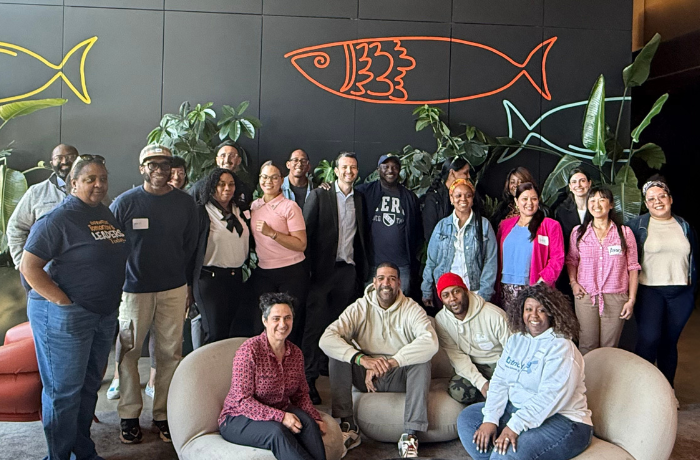
Sector Network leaders Jen Mitchell (GEN), Daniel Agosto (HSN), Ayesha George (HSN), and Shakira Hart (GEN) with JobsFirstNYC’s Keri Faulhaber, Allyson Bay, and Malia Darby. Not Pictured: Annie Martinez (TSN) and Debbie Roman (TSN)
The leaders of JobsFirstNYC’s Sector Networks came together on October 3 to strategize around cross-network impact for the year ahead and beyond. The session provided a framework for bringing together all members of the partnerships to gain unique perspectives on the alignment of each Network’s priorities.
Leaders learned about each other’s networks and how to better collaborate with each other, recognizing that despite the differences in curriculum or sector alignment, that there are key conversations to be had about how Sector Networks can leverage their collective impact together.
Key Outcomes:
JobsFirstNYC wrote a letter on behalf of the Sector Networks to the mayoral candidates ahead of the debates, underscoring that investing in workforce development is the clearest approach to improving affordability and safety in New York City. By providing clear, accessible career pathways, New Yorkers will feel a sense of belonging, purpose, and stability—crucial elements at the heart of a safe and affordable city.
Leadership identified a need for clearer pathways and entry points to city jobs. The City of New York is a top employer across tech, healthcare, and green jobs—but often has high barriers to entry with exams, long wait times, and bureaucracy.
In response to AI and the growing need for a tech-enabled, emotionally intelligent workforce, the group named that a shared essential and digital skills curriculum is an urgent need across Sector Networks partnerships.
The Sector Connector… IRL!
Sector Networks partners gathered at Solar One’s Environmental Education Center at Stuy Cove Park. The Environmental Education Center officially opened its doors early September, marking a new hub for sustainability education, workforce training, and stewardship of NYC’s vibrant parks.
Members of the three Sector Networks – Green Economy, Healthcare, and Tech – came together at Solar One’s Environmental Education Center at Stuy Cove Park for the Sector Networks Forum. Each network participated in highlighting its unique priorities, but the forum centered around the fact that there are more similarities than differences in our priorities. Recognizing that there are shared essential skills, trainings, and employers across all three networks, members aligned on FY26 priorities and cross-sector collaboration opportunities. The morning was energizing to say the least, and there is nothing better than being in community with people and friends dedicated to the same thing: economic mobility for all New Yorkers.
A look inside the convening:
Network partners shared their first jobs and what skills they still have today, highlighting everything from babysitting and patience, to food service and the importance of customer service.
JobsFirstNYC presented on the convergence of employers and skills across sectors, and the data impacts of Sector Networks over Year 2 of implementation.
Sector Network leaders shared their Networks’ accomplishments and priorities for the year ahead, finding areas for collaboration and growth.
Solar One’s team showed the group around the new center and Stuy Cove park, with an exciting preview of the battery storage area and an overview of the native and global plants at the park. Participants went home with gifts from the garden!
Runway Green’s team lead the group through a design session, brainstorming how workforce development providers can intentionally create learning and postsecondary opportunities to serve K-12 students at the budding Runway Green campus.
The momentum from the Sector Networks Forum inspired individual networks, shaped shared priorities, and will inform collaboration for the years to come!
Led by Runway Green, Sector Networks partners design pathways from K12 to postsecondary skills training.
This post continues our three-part series on the state of youth employment in New York City. In part one, Economic Mobility for New York City’s Young Adults: Where Progress Meets Persistent Barriers, JobsFirstNYC examined new findings showing that the share of young adults who are out of school and out of work (OSOW) has reached an all-time low, even as deep disparities persist across neighborhoods. In this second installment, our partners at the Center for New York City Affairs (CNYCA), part of The New School, take a closer look at the labor market dynamics shaping these trends—exploring how shifts in unemployment, labor force participation, and opportunity intersect to influence young people’s economic mobility.
This guest analysis from CNYCA, provides additional perspective and contextualizes the data to deepen our understanding of how young adults are navigating New York City’s evolving economy.
By Ludovica Tursini, Center for New York City Affairs (CNYCA) at The New School
In 2024, New York City’s youth had the highest unemployment rate of any group in the city. American Community Survey (ACS) data released this year for 2023 provides important insights into how young New Yorkers—particularly 16- to 24-year-olds—are faring in the labor market. While some indicators suggest improvement since the pandemic, others highlight persistent challenges that merit policy attention.
Youth Employment and Labor Market Participation
The rate of young people who are out of school and out of work (OSOW)—defined as 16- to 24-year-olds who are not enrolled in school and are either unemployed or completely out of the labor force—fell back to 12.6% in 2023. This marks a return to pre-pandemic levels and a notable drop of 3 percentage points from the peak of 16% during the pandemic years of 2020 and 2021.
This is a reassuring development, yet it also points to continued vulnerabilities. Young adults remain more exposed to labor market fluctuations than older workers. In 2023, the unemployment rate for out-of-school 16- to 24-year-olds was 13.4%—higher than pre-pandemic levels and more than double the unemployment rate for adults aged 18 and older.
Among the roughly 106,000 young people who were not in school and not participating in the labor market, nearly 30% reported actively seeking work, while the remaining 70% (approximately 72,000 individuals) were not engaged in school or the labor market. Related research provides some context. A report by the Future of Families and Child Wellbeing Study found that 22 year olds who had not worked in the prior year were much more likely to report disability or other barriers to employment. Consistent with this, 10% of the OSOW population reported a disability, compared with just 6% of the broader 16- to 24-year-old population.
Education does not fully shield young people from these challenges. While nearly half of young adults who are OSOW hold only a high school diploma or GED, 15% have at least a bachelor’s degree—underscoring the difficulty some young people face in navigating the transition from school to work and from adolescence to adulthood.
Demand for Young Workers
Another factor that impacts youth labor market outcomes is whether or not there are businesses looking to hire young people, who, by nature of their age, have less education and experience than the general workforce and likely have fewer networks. In 2023, the industries with the highest shares of 16- to 24-year-old workers in New York City were:
Retail Trade (18.7%)
Entertainment (18.6%)
Education (11.2%)
Social Assistance (7.9%)
Manufacturing (7.7%)
While these industries have a good track record of hiring young people, each of these industries has been reshaped in post-COVID New York, which may provide further insight into the challenges young New Yorkers face in the labor market today. For example, retail and entertainment, which employ the largest total number of youth in the city, have both experienced job decline since 2020.
Figure 1:
Source: CNYCA Analysis of American Community Survey, 2023 and 2019 1-year micro-data. U.S. Census Bureau
While young people have grown their share of total employment in these sectors since 2019, the total number of youth working in these sectors declined during this time period. Young people continue to find job opportunities in retail and entertainment, but there are simply fewer jobs in these sectors for them to access.
On the other hand, the city has seen job growth in education and social assistance in recent years, where young people have experienced an increase in total employment. The education sector has also experienced an increase in the share of young workers. While overall growth in education jobs has been minimal (compared to the significant increase in social assistance jobs), this is a sector that young people are well-networked in, by virtue of many of them being students or recent graduates themselves.
In 2023, manufacturing experienced an increase in both the absolute number of young people employed and the share of young workers in the industry. These increases were substantial enough to make this a top industry for the share of young workers, replacing Other Services (which includes jobs in a wide range of services, from auto repair to hair and nail salons).
Population Shifts and Demographic Change
Labor market indicators for young adults are also shaped by broader demographic changes.
From 2019 to 2023, the city’s 16- to 24-year-old population fell by 3.5%, and its racial composition also shifted:
The white youth population declined 2.5%.
The Black youth population declined 12.2%.
The Hispanic youth population declined 5.9%.
The Asian youth population declined 1.2%.
The Brookings Institution has documented a growing outmigration of the Black population, especially young Black individuals, from the Northeast to the rapidly expanding “New South,” driven by both economic opportunities and cultural ties.The New York State Comptroller’s Office has further linked pandemic-era economic hardship—including high inflation and rising rents—to higher rates of outmigration among Black and Hispanic households, and particularly among low-income households. According to a New York State Comptroller’s report, the share of nonwhite households leaving the city rose to 64% in 2022, up from 58% in the previous year.
In a previous post, Center for New York City Affairs reported that the city’s median household income declined by 6.9% between 2019 and 2022—one of the steepest drops among the ten largest U.S. cities. The decline in median household income was particularly sharp among Black and Hispanic households, which may have exacerbated the outmigration of these groups from New York City.
Taken together, the ACS data paints a complex picture. On one hand, rates of young adults who are OSOW among youth have receded from pandemic-era highs. On the other hand, unemployment among out-of-school youth remains elevated, and population shifts suggest widening racial disparities in who can live and thrive in New York City.
For policymakers, the message is clear: Black and Hispanic youth face compounded challenges—economic, demographic, and structural—that risk deepening inequality unless addressed through targeted policies. As the city looks ahead to a mayoral administration focused on affordability, these findings highlight the importance of policies that expand economic mobility for young adults, enabling them to build thriving futures in New York City.
The Center for New York City Affairs at The New School is an applied policy research institute that drives innovation in social policy.
On June 18, students from across New York City gathered at Brooklyn Borough Hall to be honored for reaching a milestone in their journeys toward new careers. Held at Brooklyn Borough Hall’s former Brooklyn Supreme Courtroom, the ceremony recognized students from District 79, the city’s Alternative School District, who had completed a wide variety of work-based learning experiences, including earning certifications that will prepare them for careers in solar energy, construction, and healthcare.
Reflecting on the choice of Brooklyn Borough Hall’s ornate mid-19th-century courtroom as the venue, TaNitra Watson, the District’s Work-Based Learning Coordinator, said, “We wanted students to feel a sense of pride and to know that the bar was high—that what they were doing mattered.” For Mahnur, a trilingual student originally from Bangladesh, the day was an opportunity to reflect on an internship she had just completed in which she leveraged her language skills to engage the Bangla-, Hindi-, and English-speaking members of her Queens community. For Jonathan, the celebration brought him one step closer to achieving his goal of gaining a full-time position as a radiologic technologist. For Nadefa, the afternoon event was her second ceremony of the day; that morning, she had been awarded her high school equivalency diploma.
For the district at large, it was evidence of progress; each of the students in attendance was on track to earn a diploma and transition onward to a college or career pathway. What’s more, it was the first such event in six years. Not since before the pandemic had Superintendent Glenda Esperance, Tanitra Watson, and their team gathered in this way to celebrate their career-bound students. JobsFirstNYC was thrilled to join the celebration and reflect on a collaboration that began one year earlier.
In the summer of 2024, Superintendent Esperance and then NYCPS Chief of Student Pathways Jade Grieve approached JobsFirstNYC. They explained that there was a strong foundation of career connected learning across District 79, and wanted to provide their students with additional opportunities. They wanted to strengthen the capacity of their staff and form additional partnerships with workforce training providers. Was there something JobsFirstNYC could do? Thus began Pathways Beyond Graduation, the next iteration of the organization’s Transfer to Career Collaborative.
After several months of planning, following the JobsFirstNYC’s collaborative 5-step partnership development process, the initiative launched in January with a series of professional learning sessions that reached over 150 educators across the District. Since then, teachers have started to integrate career learning into classes, 30 staff members from across the District have formed three cross-borough working groups, and school-based teams have designed pilots that launch this fall.
The work JobsFirstNYC is advancing in District 79 reflects a growing awareness that young adults need more than academic knowledge and skills to succeed in college and the workplace. Students need career preparation and real-world workplace experience infused into their daily curriculum—internships, jobs, and service-learning opportunities—supported by guidance from trusted adults to help them imagine themselves in different futures. As sentiments shift, so too does policy.
Reflecting this shift, states are updating policies to expand work-based learning. In Alabama, for example, new diploma options acknowledge and elevate career experiences, while in Kentucky, efforts are underway to provide career and technical education for all students.
New York City is following this national trend by taking bold steps to integrate career readiness into its schools. NYC Public Schools is expanding its signature FutureReady initiative and opening new career-preparedness high schools, such as the Northwell School of Health Sciences and the Bronx STEAM Center—both of which just opened their doors in September.
It has been four months since the June celebration in Brooklyn Borough Hall. In that time, Mahnur, Nadefa, and Jonathan earned their high school equivalency diploma and began the next stage of their lives, which for each of them has meant college and a part-time job. And JobsFirstNYC and District 79 have moved onto the next stage of our work together. Having completed the first two phases of our 5-step partnership development process this summer, this fall marks the beginning of our third ‘Incubate’ phase, where we will launch improvement projects in District 79 sites across all five boroughs. Stay tuned
Part One in a Three-Part Series on Youth Employment
New data show that the number of young adults who are out of school and out of work (OSOW) is at an all-time low, but remains disproportionately high in some communities.
Today’s national headlines often highlight low unemployment rates—but for New York City’s young adults, the reality is much more complex. According to the newest available data from the American Community Survey,¹more than 106,000 young adults aged 16–24 are neither in school nor working. While citywide unemployment rates suggest recovery, many young people continue to face structural and neighborhood-level barriers that limit access to education, training, and work.
Across neighborhoods with long histories of underinvestment, many young people still struggle to access opportunities that lead to financial security and economic advancement. Understanding who is affected, where, and why is critical to ensuring that all young adults can build the skills, experience, and confidence to thrive.
Prior to the pandemic, New York City’s OSOW rates were at historic lows. Those gains were all but wiped out when the pandemic disrupted the city’s labor market and educational systems. By 2022, much of the progress had been regained. The most recent data—drawn from 2023—allow us to take stock of what has stabilized, what has shifted, and where challenges remain, particularly in neighborhoods that face persistent barriers to opportunity.
Citywide Trends
The share of young adults in New York City categorized as OSOW has remained steady, shifting only slightly from 12.4% in 2022 to 12.6% in 2023. While this small change might suggest stability, the composition of this group has shifted. The number of OSOW young adults who are unemployed has declined, while those not participating in the labor market have grown by more than 5,000—even as the overall young adult population has decreased. This means that a greater share of young adults are now outside the workforce altogether, reflecting challenges such as caregiving responsibilities or persistent discouragement. Understanding these dynamics is essential: while headline economic indicators such as unemployment paint a positive picture, underlying disengagement from the labor market is rising, signaling that systems and supports are not reaching all young people equally.
Who Is Affected
The data also reveal key changes across race and gender. Young men are slightly more likely than young women to be OSOW. In addition, Black youth now represent a smaller share of young adults neither in school nor working, both in absolute numbers (down from 39,554 in 2021 to 27,496 in 2023) and in proportion of the OSOW population (28.6% to 25.9%). While this may suggest progress, it also reflects the steepest population decline among Black young adults during this period.
These demographic changes occurred amid an overall drop in the city’s young adult population, as fewer have remained or returned to New York City following the pandemic. ² This local trend sits within broader national demographic changes: across the US, the population of young adults has been shrinking due to a combination of factors, including migration patterns and lower birth rates. ³ For New York City, this means that the young adults who remain face both ongoing barriers and new pressures, shaping who can access education, training, and work.
Underemployment and Economic Vulnerability
Citywide rates of OSOW young adults alone do not capture the full economic picture. Many young adults are working part time without full financial stability. Over half of employed 18- to 24-year-olds work part time, compared with just 23% of the total employed population. In addition, 38% of young adults not currently in school or working live below the federal poverty line, meaning that tens of thousands of young adults are facing financial hardship. Yet because the official poverty measure understates the true cost of living in New York City, ⁴ more youth are experiencing economic insecurity than the numbers suggest. As a result, even with overall unemployment approaching pre-pandemic levels, economic mobility for young adults remains far from guaranteed.
Neighborhood-Level Disparities
City averages mask critical neighborhood variances. Certain community districts have very high OSOW rates—24.5% in the Bronx neighborhoods of Melrose, Mott Haven, Longwood & Hunts Point; 20% in the Brooklyn neighborhoods of Ocean Hill & Brownsville; and 16–16.2% in Central Harlem.⁵ A historical perspective shows that while citywide OSOW rates may appear relatively stable over time, these persistent and emerging local disparities continue to impede economic mobility. Communities like the South Bronx, Central Brooklyn, and Harlem have faced decades of underinvestment in education, housing, health, and workforce infrastructure, leaving young adults there with fewer opportunities to connect to school or work.
Looking Ahead
The newest data underscore that even as citywide rates of young adults not currently in school or working reach historic lows, persistent disparities and financial vulnerability remain. Many employed young adults continue to work only part-time, and tens of thousands live below the federal poverty line in a city where the cost of living is high. Neighborhood-level data make clear that where a young person lives still shapes their access to education, work, and economic opportunity. Together, these findings highlight the urgent need for targeted, community-focused solutions that give all young adults a fair chance to thrive, ensuring that progress at the citywide level translates into real opportunity in every neighborhood.
In neighborhoods with the highest rates of young adults not in school or working, JobsFirstNYC is investing in community-driven solutions that redefine what is possible. Central to this approach is listening to young people and centering their voices in the design of solutions. By understanding their experiences, aspirations, and barriers, partners can meet them where they are and reshape systems to better support success. For example, in Brownsville, the Brownsville Hub Cooperative connects workforce pipelines, small-business growth, and community healing through a resident-led model. In the Bronx, the Bronx Opportunity Network centers student well-being and career opportunities while strengthening cross-sector supports. And in Community District 8, partners are incubating a new collaboration around a shared vision that every young adult should have access to quality services and the support needed to flourish as active, valued members of their communities.
Ultimately data can illuminate need, but change depends on participation and partnership. By combining data-driven insight with place-based action—and listening to young people themselves—we can ensure that every young adult has the resources and opportunities to build a secure and thriving future.
Endnotes
¹ Source: American Community Survey, Public Use Microdata Sample for 2010 to 2023.
⁴ Seehere for more on the True Cost of Living measure in NYC.
⁵ Community-level estimates for 16- to 24-year-olds are based on pooled 2022–2023 American Community Survey data to ensure sufficiently large sample sizes for reliable estimates.
Acknowledgment: We thank our partners at the Center for New York City Affairs for preparing and analyzing the 2023 American Community Survey data, which made this reporting possible.
The Green Economy Action Plan positions New York City to be the epicenter of climate innovation, promising a booming industry that will host tens of thousands of jobs. Nearly one third of these jobs will be in emerging occupations that demand a skilled workforce prepared to take on new challenges. The Green Economy Network powered by JobsFirstNYC, a collective of 30 workforce development organizations, employers, educational institutions, and community leaders, is ready, willing, and able to prepare New Yorkers for what’s next一but is New York City ready to support the necessary components to both the next generation and incumbent workers’ success?
Voices from the Green Frontline outlines what is missing to ensure that New Yorkers most affected by climate change are the ones directly benefiting from the influx of clean energy jobs and promise of economic mobility. This brief highlights promising practices and shared challenges while outlining policy solutions that can scale accessible opportunities and ensure the clean energy transition delivers high-quality jobs for all communities.
A Call to Action
Fund wraparound supports as a key component of workforce development: Access to transportation, childcare, stipends, housing support and legal services are fundamental to trainee success. Funding streams must cover these essentials as core workforce infrastructure, just as a full-time or part-time position would.
Align training standards to actual emerging roles: EV technicians, solar installers, energy auditors, and building automation specialists are in demand, yet standards and certifications are unclear. Policymakers should coordinate with employers and training providers to establish transparent occupational pathways.
Strengthen bridges to advanced skills:Introductory trainings open the door to entry level — but many participants stall when moving to advanced certifications due to costs, equipment needs, or employer bias. Investment in tiered training models and subsidized certifications is critical.
Expand apprenticeships and employer partnerships:Employers often expect a year of experience for “entry-level” roles. Expanding on-the-job training requirements, incentivizing employer participation through tax credits, and funding apprenticeships can close this experience gap.
Standardize workforce metrics across agencies: Training providers are competing for funding with inconsistent expectations. The city and state should set shared metrics to evaluate outcomes fairly, reduce duplication, and strengthen accountability.
What Green Economy Network Members are Saying
❝What often gets overlooked is the emotional and cultural shift required for someone who’s been system-involved or underemployed to reimagine themselves in a technical field. We’ve seen that when conditions are right, graduates not only succeed but go on to lead.
❝Our training programs are producing overlooked talent that the green economy desperately needs. The challenge isn’t motivation — it’s creating clear, affordable, and real pathways into good jobs.
Positive Returns on Investment
Two graduates of HVAC and solar programs moved from internships into permanent union jobs, showing the potential of structured employer pipelines.
An aspiring entrepreneur completing a pre-apprenticeship program advanced into NYCHA contracting work and eventually started her own business, employing others from her community.
The Clean Energy Workforce Bill of Rights
We asked members and workforce professionals “What does a Green Workforce Bill of Rights look like to you?” After 30+ responses, this is the Green Economy Network’s,
Green WorkforceBill of Rights:
Living wages and safe conditions
Paid leave, healthcare, and retirement
Union rights and collective bargaining
Free/low-cost education and stackable credentials
Priority hiring for environmental justice communities
Environmental justice and community reinvestment
Thank you to the Green Economy Network’s Policy and Development Working Group for leading the development of this survey and brief in the spirit of our shared values: People First, Bold Ideas, Collective Genius, and Informed Objectivity.
Unrestricted giving is transforming philanthropy and JobsFirst NYC is highlighted for its impact in the October 2025 issue of GIVING Magazine.
In the feature article, “No Strings Attached: How JobsFirstNYC Proved That Unrestricted Giving Works,” CEO and President, Marjorie Parker, explores how unrestricted giving fuels innovation and impact, empowering organizations like JobsFirstNYC to break down barriers to economic mobility and scale what works.
This is a space dedicated to sharing updates from the Green Economy, Healthcare, and Tech Networks; reporting on goals and insights, relaying program openings and recruitment opportunities, and fostering cross-network collaboration.
This summer, JobsFirstNYC hosted our 10th Annual Adapting to the Future of Work convening at Baruch College. The day featured conversations central to the mission of the Sector Networks: solutions are found in the communities our partners serve and that by working together, we can achieve more at a greater scale. Using the momentum from Adapting, the Sector Networks are planning for a year dedicated to ensuring the long-term sustainability of the Networks and the impact they will have collectively.
Sector Networks employer partners: Jerome Joseph, Salesforce, Pooja Nayyar, NY Power Authority, Montefiore Medical Center, and Randy Peers, Brooklyn Chamber of Commerce, in an engaging conversation around the future of work in an age of emerging tech and changing political climate.
Members of the three Sector Networks showed up and showed out in full force at Adapting to the Future of Work. TSN partners from Per Scholas hosted a workshop on people-first workforce strategies. This highlighted that it is critical to center youth voice and experience in all aspects of program design–an idea that is foundational to the sector networks’ structure. Both program and employer partners representing each sector network attended Adapting and contributed to both its content and success.
Green Economy Network
Responding to employer and community needs
Action planning in July and August, GEN sharpened its strategic priorities to strengthen sector partnerships, expand industry-aligned training, and deepen impact.
Here’s a look at the GEN’s summer.
As new employer initiatives roll out, the Green Career Council working group will be a key player in matching training to employer needs, ensuring that New York City’s talent supply matches labor market demand.
GEN partners have come together to imagine and design a service delivery modelin partnership with the Fiber Broadband Association and Wireless Infrastructure Association to set up an NYC-specific Fiber Optic training pathway.
Voices from the Green Frontlineis live! Take a look at an interactive storytelling campaign gathering real stories from workforce practitioners in the green workforce space, organized by the Policy and Development working group with gracious contributions from all members. Check it out here.
Healthcare Sector Network
Defining a no wrong door approach to healthcare careers
We kicked off fiscal year 2026 with an in-person brainstorming session, with all organizations coming together to plan a year of action and impact.
A recap of the HSN’s summer planning:
Leaders identified the need to flex our policy muscle as the changing funding landscape poses risks not only to healthcare jobs, but to the people these institutions serve. Through storytelling initiatives, the HSN seeks to showcase what success looks like when programs are well-funded and participants are holistically supported.
The HSN mapped back their FY26 prioritiesto their 2022 logic model, to think critically about how these priorities have shifted over a new administration, new funding streams, and the rise of AI and emerging technologies in healthcare.
Plans include our third annual Careers in Care, the HSN’s signature event for healthcare employers, students, jobseekers, and member skills training providers to grow new and deepen existing partnerships with healthcare institutions, bringing together peers of leading hospitals, clinics, and more — while also presenting opportunities to training and employment for individuals.
Tech Sector Network
Centering humans in the AI era
After a successful summer of Opportunity Day and an Employer Roundtable, the TSN jumped into defining what is most important for early career jobseekers in a rapidly changing tech landscape.
A look into what’s ahead.
The power of human-centered skills like empathy, curiosity, and a passion for learning is a top priority for TSN this upcoming year, as the rise of AI highlights the importance of emotional intelligence and people skills for young people entering their first job.
TSN presents a unique opportunity to convene alumni networks creating a robust network of early career professionals who have graduated from TSN programs. By doing so, TSN will enact an important lesson learned from Opportunity Day: alumni insight is our greatest asset.
Small and mid-sized employers play an important role in navigating the layoff surge in larger companies. Smaller employers often offer greater flexibility and a more streamlined hiringprocess compared to larger companies, and provide increased direct growth opportunities. The TSN aims to engage more small to mid-sized employersin this year’s strategic activities.
Bright Spots from Our Year
As the Sector Networks close the chapter of fiscal year 2025, here are some exciting highlights from this year’s end of year reports!
HSN: Clinical partnerships are expanding — employers and education providers are increasingly co-developing training and placement pathways.
TSN: Collaboration with employers is driving more internships and stronger entry-level opportunities, highlighting the value of coordinated engagement.
GEN: New and expanded green training programs are launching across the network, signaling strong momentum in workforce preparation for climate-related jobs.
All Sector Networks: Across networks, at least 6+ new or redesigned training programs launched since January, showing sector networks are actively seeding new opportunities.
For more about Sector Networks, contact Malia Darby, Manager of Work Solutions at JobsFirstNYC via email at mdarby@jobsfirstnyc.org.